

It is often thought that the consumption of amino acids and proteins in vegetarian diets may be inadequate. It has now been shown that the amounts and proportions of amino acids consumed by vegetarians and vegans are usually more than sufficient to meet and exceed daily needs, provided two conditions are met: the first is that the daily diet includes a wide variety of high-protein plant foods, and the second is consuming adequate energy intake (calories).
Why is protein given so much importance?
Proteins are essential nutrients and play a very important role in the functioning of our vital organs, but they are not needed in large quantities, as many tend to think. In general, in a balanced diet, only about 10-20% of protein is needed.
Proteins are made up of amino acids, which is what we truly need for our biological functions. Humans cannot create nine of the twenty most common amino acids, so these are considered essential. That is, we need to get these amino acids through our diet so that our body can create proteins.
What are the sources of plant protein?
Eggs, cow's milk, beef, and fish have always been labeled as having very high-quality proteins, thanks to their significant content of all essential amino acids. In the plant world, soy, quinoa, and spinach are considered high-quality plant-based protein foods, although there are other plant-based protein sources that also contain all essential amino acids, even if their amino acid distribution profile is less optimal compared to animal-derived foods.
For example, cereals have low amounts of lysine, and similarly, the sulfur containing amino acids like methionine and cysteine are slightly lower in legumes than recommended, as is their tryptophan content. Peas also have a good amino acid profile but lack methionine and cysteine, which can be found in their dairy and soy equivalents. Although pea protein is very popular in the vegetarian world, it has a less complete amino acid profile compared to soy, however, it has great benefits for cardiovascular health and its high arginine content can contribute to diabetes control when combined with exercise.
This is relevant for someone who only eats rice or only beans all day and does not have a varied consumption of foods. However, vegan or plant-based diets, despite being stricter, contemplate a very varied consumption of plant foods such as legumes, pulses, cereals, seeds, and nuts, thus facilitating a complete intake of essential amino acids and protein.
How do we know if our vegan diet contains the complete protein we need?
Until recently, it was believed that it was necessary to consume a certain combination of foods, for example: legumes and cereals, in the same meal to obtain amino acids in adequate quantities. However, it has now been shown that it is not necessary to consume them in the same meal or in specific proportions; it is only necessary to consume a wide variety of foods throughout the day to obtain the adequate amount of amino acids.
Similarly, protein intake for vegetarians or vegans is not primarily a matter of specific amino acid distributions; it is more a matter of total protein intake. This means that amino acid consumption is not the problem, but rather the amount of protein consumed throughout the day. Here lies the importance of knowing the recommended protein amounts for each of us. Consuming the right amount of protein is key to preventing deficiencies.
In this line of thought, the American Dietetic Association maintains the following stance:
“Plant protein can meet nutritional needs when a variety of plant foods are consumed and energy needs are met. Research indicates that a variety of plant foods eaten over the course of a day can provide all essential amino acids and ensure adequate nitrogen retention in healthy adults, so it is not necessary for complementary proteins to be consumed in the same meal. Estimates of protein needs for vegans vary depending to some extent on dietary selections. A recent meta-analysis of nitrogen balance studies found no significant differences in protein needs based on protein source.
The quality of plant proteins varies. Taking into account the protein digestibility-corrected amino acid score, which is the standard method for determining protein quality, isolated soy protein can meet protein needs as effectively as animal protein, while wheat protein ingested alone, for example, may be 50% less usable than animal protein. Protein needs could be higher than the Recommended Daily Allowances (RDAs) in vegetarians whose dietary protein sources are those that are digested less efficiently, such as some cereals and legumes.
Although some vegan women have minimal protein intakes, the typical protein intake of ovo-lacto vegetarians and vegans appears to meet and exceed needs. Athletes can also meet their protein needs with plant-based diets.”
What about energy intake?
At the same time, the person's total energy intake and how much of that energy comes from high-protein plant foods is something that should not be overlooked. If a person consumes the corresponding energy according to their needs during the day and this consumption contains a good and varied supply of plant-based protein-rich foods, then we could consider the protein intake to be sufficient.
In the case of athletes, it is recommended to monitor their protein consumption, as both they and older adults are groups whose protein requirements are increased. In these cases, there is a wide variety of products and foods on the market that allow for sufficient protein intake, including our new meat alternative in powder form, Vegan Meat Mix. It contains 75% concentrated pea and soy proteins among its main ingredients, ensuring a complete supply of amino acids, made only from natural and GMO-free ingredients, making it a complete and additive-free formula. In addition, it allows us to quickly prepare a variety of dishes, such as burgers, meatballs, minced "meat" to accompany pasta or as a filling for other preparations, thus facilitating its combination with a wide variety of other foods.

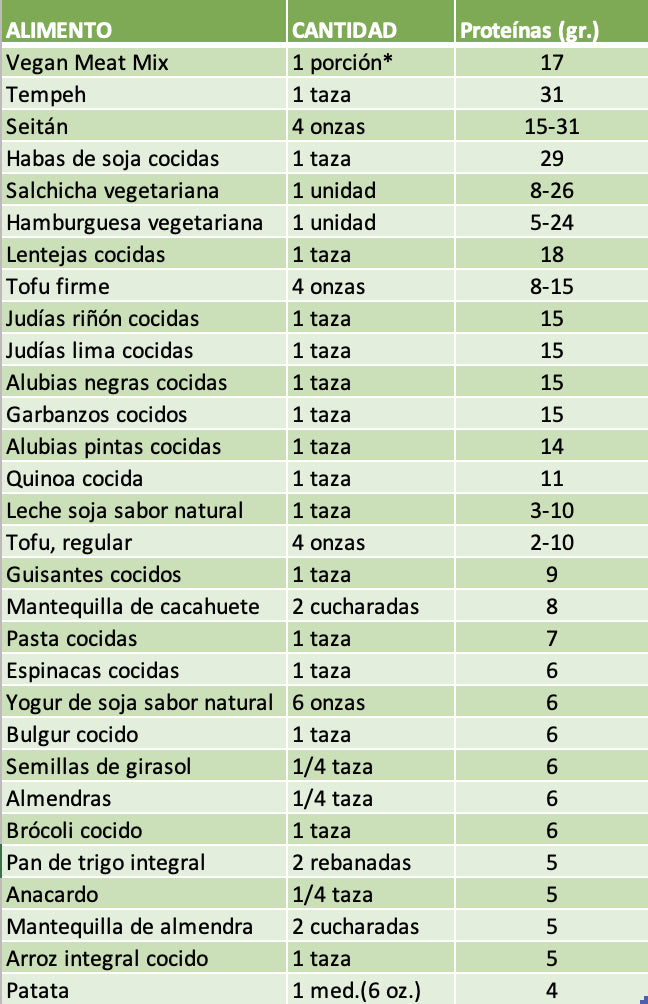
Considering all this, we can say that it can be easy to reach the necessary protein amounts when following a vegetarian and even vegan diet. In the following table, we show the amount of protein in various plant foods and vegan products.
Table 1: Protein content of some plant-based foods and vegan products

*One portion of Vegan Meat Mix is equivalent to 100g of product prepared with olive oil.
In conclusion:
Our recommendation before making any changes to your diet is to seek reliable information and, if possible, get advice from a professional in the field who can help you distribute foods in a varied way to ensure the correct intake of energy and nutrients in your daily life, always adjusted to your habits, preferences, and lifestyle. Rest assured that opting for a diet with a higher consumption of plant-based foods does not prevent you from achieving an adequate intake of high-quality protein, as long as your diet is varied in whole grains, legumes, seeds, nuts, and vegetables throughout the day.

Other articles of interest:
- Taking Vegan Protein is Good, Even if You're Not Vegan
- Why choose pea vegan protein and not others?
- Can you gain muscle mass with vegan protein?

Compartir:
7 mistakes to avoid in your summer diet
How can I replace animal protein in my meals?