

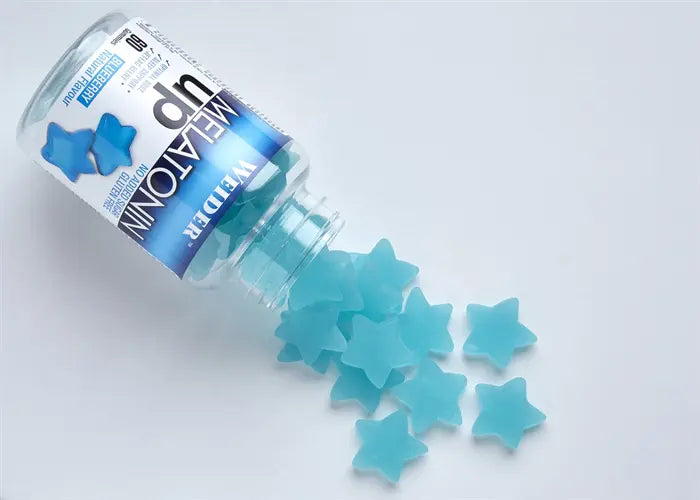
In sports performance, just like in daily life, health is based on exercise, healthy eating, and rest. And insomnia, precisely, negatively affects health. But melatonin can help you combat insomnia.
We read a lot about training, sets, strength training, BCAAs, isotonic drinks, or other supplements. Well, among the three pillars (exercise, nutrition, and rest) for optimal performance, rest is not always present in the popular athlete. But lack of rest or insomnia can not only lead to not assimilating training and not achieving good sports results, it can be a trigger for an injury, or it can lead to a decrease in the immune system that favors infectious conditions.
In this post, when we talk about rest, we will not talk about the day our coach suggests we don't train, we will talk about nighttime rest, about sleep hours. Human beings spend between one-third and one-fourth of their lives sleeping. Sleep is an integral part of daily life, a biological necessity that allows the reestablishment of essential physical and psychological functions for full daily and/or sports performance.
Stages of sleep
As you may know, sleep consists of different stages, which I will now summarize:
- Non-REM Stage: This consists of 4 sub-stages (Stages I; II; III; IV), which indicate the depth of sleep. Muscle tone decreases, leaving our body increasingly relaxed and immobile, as do breathing and heart rate. Meanwhile, the slow eye movements at the beginning of sleep disappear completely. The progression from stage I to IV lasts approximately 90 minutes and involves a deepening of sleep with increasing sensory isolation from the environment.
- REM Stage: REM sleep, "Rapid Eye Movement," first appears 90 minutes after falling asleep. One of the characteristics of REM sleep is the loss of muscle tone, thus protecting us from injury or accidents resulting from moving our bodies in response to what happens in our dreams. Throughout the night, this type of sleep alternates with the four different stages of non-REM sleep, although most REM sleep occurs during the second half of the night.
Importance of sleep
In short, we could say that we sleep to be awake during the day and that, precisely because we are awake and active during the day, we need to sleep.
While still far from having clear answers to the global phenomenon of sleep, it does seem that Non-REM sleep has a function linked to the repair of bodily tissues, as well as the conservation and recovery of energy. In contrast, during REM sleep, brain repair processes (neuronal reorganization, consolidation and storage of relevant memories) predominate, as well as the elimination and forgetting of those that are not. This would explain how, when an organism is learning something, the REM phase increases during its sleep, as in children. Conversely, when subjected to strong physical exertion, for example, during exercise, the non-REM phase increases.
What is insomnia
A decrease in sleep or poor sleep quality can affect us during waking hours, causing: a decrease in intellectual performance, with difficulties in concentration and memory use, as well as in the capacity for abstraction and logical reasoning; reflexes decrease, physical performance decreases; it can affect our mood, leading to anxiety and depression. There seems to be a relationship between lack of sleep and a higher incidence of certain hormonal, cardiovascular, immunological, or psychiatric pathologies.
Insomnia is the most common sleep disorder. It is characterized by:
- Difficulty initiating or maintaining sleep or the feeling of not having had restorative sleep
- It causes discomfort, emotional, social, work-related, or other important problems in the individual's activity
- A significant decrease in sports performance.
Depending on its duration, it can be transient (less than one month duration) or chronic (more than one month).
In the popular athlete, insomnia can occur acutely or chronically. We could say that the acute situation happens in the days leading up to a competition or after a long trip to reach the competition venue. If it is chronic, different aspects such as illnesses, medications, overtraining, stress, etc., should be evaluated.

What can we do about insomnia problems?
In case of a chronic situation, the first thing would be to consult a professional who can assess the situation and maintain healthy sleep habits.
Benzodiazepines and hypnotics are the most commonly used medications for insomnia, but they are not without side effects that can interfere with sports performance.
Therapies such as homeopathy, acupuncture, and phytotherapy are or tend to be of great help in sports, as they lack general adverse effects or those that could interfere with sports performance. But in this post, I will focus on justifying the use of melatonin to treat insomnia.
Use of melatonin in insomnia
Melatonin or N-acetyl-5-methoxytryptamine is a hormone produced in the pineal gland. It is synthesized from tryptophan, an amino acid that is converted into serotonin, which, in turn, is transformed into melatonin. This hormone is present in all living organs in concentrations that vary according to the diurnal/nocturnal cycle. Its synthesis is triggered by certain factors such as the presence of tryptophan or changes in ambient light. Melatonin is considered a neurohormone.
Melatonin is a substance that:
- Intervenes in circadian physiology, due to the large number of natural chemical receptors we have in the body.
- Participates in many physiological processes.
- Regulates the circadian cycle.
- Improves sleep quality in cases of insomnia and irritability.
It is a natural endogenous substance (which we produce ourselves). Melatonin is synthesized from the essential amino acid tryptophan and participates in a wide variety of cellular, neuroendocrine, and neurophysiological processes, such as controlling the daily sleep cycle. It also regulates the secretion of growth hormone, gonadotropins, and has antioxidant activity. Athletes often make long, transoceanic trips that affect their rest. This is more common in elite athletes.
The reviewed literature indicates that the use of melatonin in these situations improves the symptoms of insomnia caused by jet lag. In addition, studies show that it decreases the time to fall asleep and that sleep quality is better. On the other hand, it offers benefits due to its antioxidant action. It appears to have anticancer effects, although much remains to be studied in this field.
Tips for using melatonin
Approximately two hours after ingestion, it induces sleep. The dosage ranges from 1mg to 10mg (from 2mg onwards, it is subject to medical prescription) and should be ingested approximately one hour before going to bed and always at the same time.
Precautions for treating insomnia with melatonin are that it should not be administered to:
- People sensitive to this substance
- If you are undergoing any pharmacological treatment for depression or insomnia
- If you suffer from any heart disease.
- Children or pregnant women
- During lactation.
It is important to know that it can have interactions with antidepressant medications, so it is necessary to consult a doctor. Do not administer with:
- Oral anticoagulants
- Medications for the treatment of hypertension
- Preparations containing caffeine.
- Stimulant medications.

Bibliography:
- Medicinal Plants for Insomnia. Infito Editorial Complutense, S. A. 2008.
- Arendt J. Aldhous M, Marks V. Alleviation of jet lag by melatonin: Preliminary results of controlled double blind Trial. Br Med J 1986; 292:1176
- Patrie K, Conaglen JV, Thompson L Chamberlain K. Effect of melatonin on jet lag after haul flights. Br Med J 1989; 298:705-707.
- Garfinkel D, Laudon M, Nof D, et al. Improvement of sleep quality in elderly people by controlled release melatonin Lancet 1995; 346:541-544

Compartir:
Weider Protein Bar Guide to Boost Your Diet
What are macronutrients?