

By Paula Ellis (IG: @paulaellisfit) on March 23, 2025
If you had to think of a supplement to improve your physical performance, it's very likely that you're already thinking about creatine. We know about its benefits in sports, but are all creatines the same? Is it only for athletes who train for strength, or does it have more benefits than we imagine? And do we really know everything about this supplement?
In this article, you will find everything you need to know about creatine, based on proven scientific evidence.
What is creatine and why is it so popular?
Creatine is a natural compound that is produced in small amounts naturally in our body (mainly in our liver, kidneys, and pancreas) and stored in our muscles.
To ensure our daily needs are met, creatine can also be obtained through protein-rich foods (meat, fish, dairy, etc.) and directly through supplements.
The main function of creatine is to provide energy to cells, especially muscles, but there is scientific evidence of benefits that go beyond the muscular level. Based on decades of research, it is known to be one of the most studied and used supplements, not only in the sports world.
What are its benefits?
Scientific studies have shown that creatine provides multiple benefits that can impact our overall health. Among the most prominent, we find:
▪ Increase in strength, power, and muscle mass: Studies have shown that its use improves the ability to perform higher power and high-intensity training, thereby promoting muscle growth.
▪ Greater performance, endurance, and recovery: Not only is athletic performance increased, but it also helps reduce tiredness and muscle fatigue, accelerating the recovery process after training.
▪ Cognitive benefits: Recent studies have indicated that creatine can improve memory and cognitive function. In situations of mental stress or sleep deprivation, it could even improve brain function.
▪ Neuroprotective effect: Preliminary research suggests it could be related to the prevention of certain neurodegenerative diseases.
How can creatine be consumed?
There are several ways to take it if we opt for a supplement: capsules, powder, and even in gummy form.


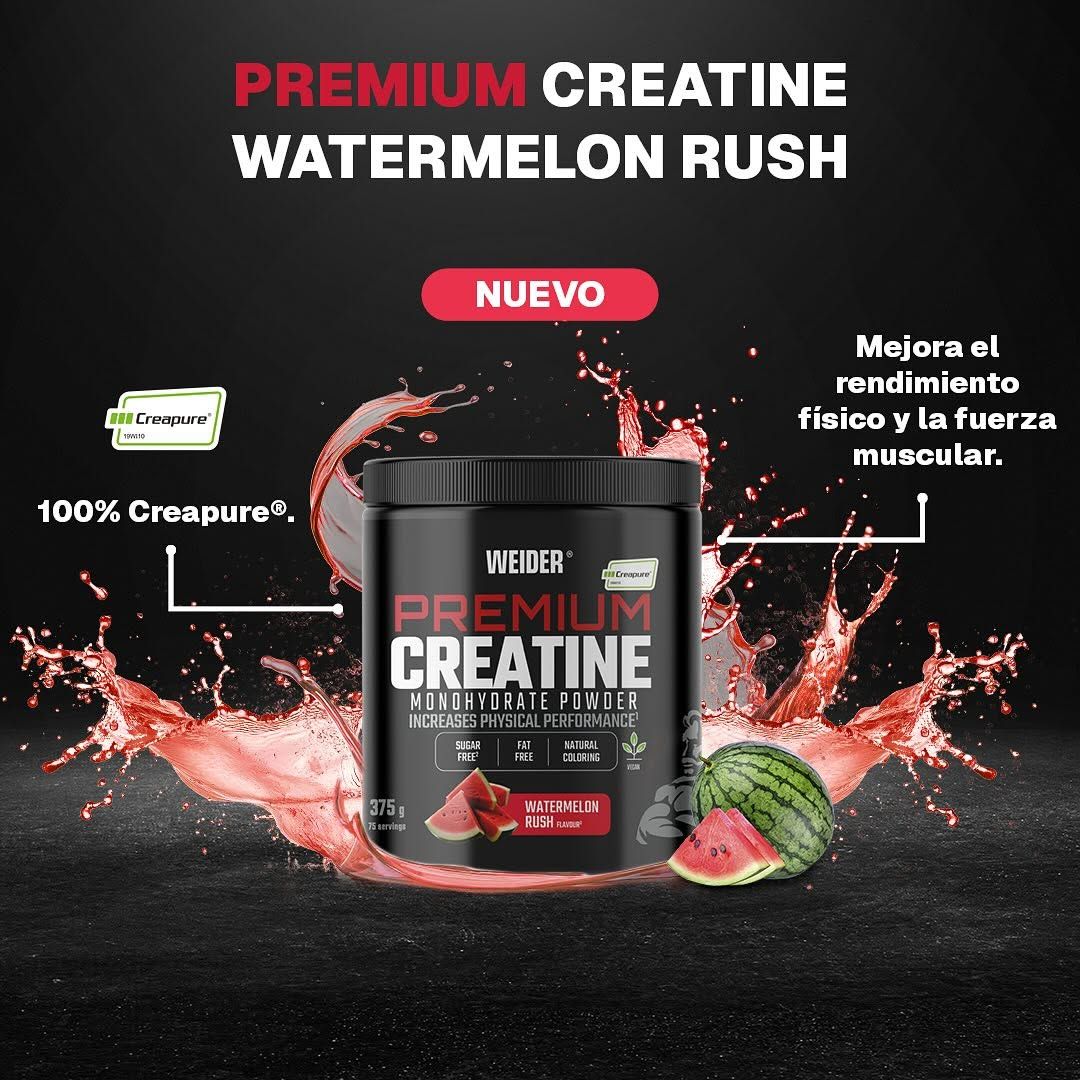
▪ Flavored powder format: Creatine powder WEIDER Premium Creatine (Creapure®), watermelon flavor, is an excellent option for several reasons:
1. Creatine monohydrate: Its raw material is 100% pure, free of impurities, and ensures maximum quality through the Creapure® seal.
2. No added sugars or fats.
3. With natural colorings.
4. Suitable for vegans.
5.  The watermelon flavor is a refreshing option, ideal for taking during training mixed with water to ensure greater hydration.
▪  Unflavored powder format: If you want to add creatine to your pre-workout, during training mixed with essential (EAA) or branched-chain (BCAA) amino acids in powder that already have flavor, or even in your post-workout protein shake, the unflavored format is the ideal option. To ensure the highest quality of the raw material, it also features the Creapure® seal.

▪ Gummy format: Currently, there is a very innovative way to take creatine thanks to WEIDER Premium Creatine Gummies. With a delicious cherry flavor, it is ideal if you are looking for a palatable and easy-to-take option. It is 100% Creapure® creatine monohydrate. The recommended dose of 3 gummies corresponds to 3.5g of creatine monohydrate.
When to take creatine and how much?
The recommended dose varies according to body composition and objective, but there is scientific evidence of the beneficial effect obtained with a daily intake of 3g.
The most common way to supplement is an intake of 3-5 grams per day, either before or after training, or even distributed at other times of the day, both on training days and rest days. Creatine works through a cumulative effect in the body, therefore, the effects do not depend on a single dose nor are they immediate.
Is it safe to consume creatine as a supplement?
Creatine is one of the supplements with the most scientific evidence and, always starting from maximum quality in the raw material, it is considered one of the safest supplements on the market.
There is no evidence that creatine consumption in healthy people can lead to kidney damage or cause excessive fluid retention. It should be noted that the increase in water that occurs due to its intake is intracellular, allowing for greater hydration of cells internally.
Therefore, regular consumption can provide long-term benefits; one simply needs to adequately regulate the amount ingested according to each person's body composition and objective.
Conclusion
Currently, creatine is a highly recommended supplement because it not only helps improve sports performance but also helps take care of your health and has a potential effect on cognitive health. Furthermore, its level of effectiveness and benefits for integral health are backed by decades of scientific evidence. If you want to boost your body and mind, it is one of the supplements that cannot be missing from your daily routine.
Compartir:
Magnesium: An Essential Mineral for Your Overall Health
How can I tell if I have prostate problems?