

The prostate is a male sexual gland located in the anatomical pelvis. It is located below the bladder neck, behind the pubis, and in front of the rectum. It is traversed by the prostatic urethra and the ejaculatory ducts. In relation to the prostatic urethra, there is an anterior zone of predominantly fibromuscular tissue and a posterior, preferably glandular, zone. From a pathophysiological point of view, three zones are differentiated in the prostate: a central zone that encompasses the ejaculatory duct trajectory, a peripheral zone where most prostate cancers will be located, and a transitional zone where prostatic hyperplasia develops.
Basically, we can classify prostate pathology into three types: prostatitis, benign prostatic hyperplasia (BPH), and prostate cancer (PC).
1. Prostatitis:
Prostatitis can be classified into two groups:
a. Acute Bacterial Prostatitis: In this case, a bacterial infection occurs, and as a consequence, a more or less diffuse inflammation of the prostate gland occurs. It is the most common infectious pathology of the urinary tract in middle-aged men.
The symptoms of acute prostate infection are typical of the urinary tract: fever and voiding syndrome with dysuria, pollakiuria (frequent urination), urinary urgency.
b. Chronic Prostatitis, which can be bacterial or non-bacterial.
The symptoms of chronic prostatitis are similar to those of acute prostatitis, without acute symptoms (fever, chills, etc.), but with a predominance of irritative symptoms such as pollakiuria, dysuria, urinary urgency, etc. However, it should be noted that many patients are asymptomatic.
For diagnosis, a urine dipstick test can be done in the office, which can guide us, but the ideal would be to perform a urine analysis (preferably of the first morning urine), with culture and antibiogram (which informs us about the antibiotic to which the bacteria is sensitive).
2. Benign Prostatic Hypertrophy (BPH):
Benign prostatic hypertrophy or benign prostatic hyperplasia is simply an enlargement of the prostate that occurs with age. It is the second most common cause in urology. This enlargement can obstruct the urethra to a greater or lesser extent, causing more or less symptomatology. The symptomatology tends to worsen but slowly and progressively.
Regarding symptoms, we can have irritative symptoms (pollakiuria, nocturia, urinary urgency, incontinence) or obstructive symptoms (decreased stream, difficulty initiating urination, intermittent stream, feeling of incomplete emptying, post-void dribbling, urinary retention).
An important issue is to know how to discern whether prostatic growth is benign (BPH) or if we have a patient who may have prostate cancer. For this reason, a series of tests, described below, and even some others not detailed in this article, should be performed.
How can I know if I have prostate problems?
Below is a questionnaire that family doctors and urologists use to assess the symptoms of patients suffering from prostatism.
It takes about 3-5 minutes, and the interpretation is very simple.
It quantifies symptoms and their impact on quality of life (Fig. 2). It is validated in Spanish and designed to be completed by the patient himself. It assesses the frequency of symptom occurrence, as well as the impact on quality of life, a part that may determine, as we will see later, the need for treatment or not.
Interpretation:
• The IPSS score ranges from 0 points (absence of symptoms) to 35 points (severe symptoms) for the 7 symptom items. It reaches 41 points by adding the quality of life item.
• Taking into account the score in the 7 items, it is considered:
o 0-7 points: mild symptoms
o 8-19 points: moderate symptoms
o 20-35 points: severe symptoms
In the last two cases, you should consult your doctor for a more detailed evaluation and/or a complete study.

What medical tests are usually ordered for the evaluation of a prostate problem?
As with any disease, in addition to the patient's symptoms and physical examination, we usually order some medical tests either to confirm the diagnosis, rule out other diseases, etc.
Regarding the physical examination, it is very simple, but on the other hand, men are usually reluctant. This is the dreaded Digital Rectal Exam. What do we achieve with a digital rectal exam? The prostate is evaluated in a way that we cannot with any other diagnostic test. The digital rectal exam provides information about prostate size, shape, surface, consistency, and tenderness. No other test gives us this information. After the examination, tests such as:
• Complete blood count with renal function and PSA
• Urine analysis
• Suprapubic ultrasound: This provides information about prostate size, the presence of post-void residual (PVR) urine, and the existence of complications. It is simple to perform and can usually be done routinely in the office.
• Urinary flowmetry: Flowmetry is a non-invasive urodynamic test that quantifies the volume and duration of the urinary flow, assessing the degree of obstruction. Just remember that with age, the strength of the stream decreases. It is interesting for men to also do pelvic floor exercises (Kegel exercises), hypopressive abdominals, or even Pilates, which could help maintain better health of the urinary system.
What treatment can I do for Benign Prostatic Hyperplasia?
The first thing is to maintain healthy lifestyle habits, such as daily exercise, healthy eating, and adequate rest, where stress control in the world we live in is also essential.
Common pharmacological treatments are:
1. α-Blockers (alfuzosin, tamsulosin, naftopidil), with adverse effects: dizziness, orthostatic hypotension, asthenia, drowsiness, headache, erectile dysfunction, decreased libido, general ejaculation disorders.
2. 5-α-reductase inhibitors (finasteride and dutasteride). The most frequent undesirable effects are mainly in the sexual sphere due to hormonal blockade: erectile dysfunction, decreased libido, reduced ejaculatory volume or ejaculation disorders, and gynecomastia.
3. Phytotherapy:
a. Epilobium angustifolium: Also known as fireweed, this plant has been used to treat prostate problems, especially BPH.
It is a medicinal plant (phytotherapy) that contains agitanins as active ingredients, where oenothein-A and B have an antiadenomatous effect at the prostate level, as they inhibit the activity of 5-α-reductase and aromatase, two enzymes involved in the etiology of benign prostatic hyperplasia.
Benefits in general male health: It is known for its anti-inflammatory and antioxidant properties. It helps reduce inflammation in the prostate and can improve urinary health.
Benefits in the prostate: Epilobium angustifolium can reduce prostate size and alleviate BPH symptoms, such as difficulty urinating.
Benefits in sports performance: Although its main benefit is for prostate and urinary health, maintaining general health can have an indirect effect on sports performance, improving overall well-being.
b. Pomegranate extract: Several studies have correlated the consumption of pomegranate with a lower predisposition to sexual health problems such as erectile dysfunction. Studies by the University of Alabama found anti-inflammatory effects. The phenols and polyphenols it contains are relevant for the prevention and treatment of prostate cancer.
Pomegranate juice extract is rich in antioxidants, especially polyphenols, such as ellagitannins, which have anti-inflammatory and antioxidant properties.
Benefits in general male health: Antioxidants help protect cells from damage caused by free radicals, contributing to cardiovascular health and reducing the risk of chronic diseases.
Benefits in the prostate: Some studies suggest that pomegranate consumption may help prevent prostate cancer, as it has antioxidant properties that can reduce oxidative stress in prostate cells.
Benefits in sports performance: Pomegranate extract can improve blood circulation, which helps better oxygenation of the muscles and can contribute to faster recovery after exercise.
c. Mango Powder (Careflow Patent)
It is a supplement designed to improve blood circulation and vascular function, which is key for general health and physical performance.
Benefits in general male health: Improves blood circulation, which has a positive effect on cardiovascular health and general vitality.
Benefits in the prostate: By improving circulation, it can promote better oxygenation of tissues, which could indirectly contribute to prostate health.
Benefits in sports performance: Improved blood circulation is beneficial for sports performance, as it enhances oxygen supply to muscles during exercise, which improves endurance and reduces fatigue.
4. Supplements:
Zinc: Zinc is an essential mineral that plays a key role in many biological functions, such as immune function, cell division, and protein production. Perhaps it is the most important nutrient for prostate health. It decreases the activity of 5-α-reductase, as well as hormonal components. In addition, it is important for semen production.
Benefits in general male health: It is crucial for the immune system and reproductive health. It also participates in protein synthesis and wound healing.
Benefits in the prostate: Zinc has a protective effect on the prostate. Zinc has been shown to inhibit the growth of prostate cancer cells and support the general health of the prostate gland.
Benefits in sports performance: Zinc is fundamental for testosterone production, which can improve muscle performance and recovery after exercise.
a. Lycopene: It is a carotenoid that is present in prostate tissue, and the higher the levels, the lower the probability of this tissue mutating. Lycopene is an antioxidant from the carotenoid family found in large quantities in tomatoes.
Benefits in general male health: Lycopene has antioxidant properties that protect cells from oxidative damage and can reduce the risk of chronic diseases, such as heart disease.
Benefits in the prostate: Several studies suggest that lycopene can be beneficial for prostate health, as it has been associated with a reduced risk of prostate cancer and also with a decrease in benign prostatic hyperplasia (BPH), a common condition in older men.
Benefits in sports performance: As an antioxidant, lycopene helps reduce exercise-induced oxidative stress, which can contribute to muscle recovery and increased physical endurance.
b. Selenium: Selenium is another essential mineral that acts as an antioxidant, protecting cells from oxidative damage. Various studies have shown that a diet rich in selenium leads to a decrease in cancer. This is for several reasons, acting at the immune system level, limiting free radicals, stimulating cellular respiration, etc.
Benefits in general male health: Selenium supports the immune system and has antioxidant properties that protect against cardiovascular diseases and other disorders.
Benefits in the prostate: Selenium has been shown to have protective effects against prostate cancer due to its antioxidant properties. It is also believed to help reduce prostate inflammation.
Benefits in sports performance: As an antioxidant, selenium helps reduce exercise-induced cellular damage, which can improve recovery and endurance.
b. Boron: Boron is an essential trace element that plays several important roles in the human body, although it is not found in large quantities, it has beneficial effects on general male health, the prostate, and sports performance. Boron has several actions at the prostatic level. On the one hand, it has some anti-inflammatory activity; on the other hand, it promotes hormonal balance; and finally, there are studies suggesting that boron favors the elimination of cancerous cells at the prostate level.
Let me explain each of these benefits:
a. Benefits for general male health
• Hormonal regulation: Boron plays a key role in hormone regulation, particularly testosterone. Boron has been shown to increase free testosterone levels, which is crucial for male health, as testosterone affects muscle development, libido, and bone density, among other things.
• Improves bone health: This mineral can also improve the absorption of calcium and magnesium, which contributes to bone health, something particularly important as men age.
• Inflammation prevention: Boron has anti-inflammatory properties that can help reduce symptoms of chronic inflammation in the body, which can improve overall quality of life.
b. Benefits in the prostate
• Protection against prostate cancer: Some studies suggest that boron has properties that could be useful in preventing the development of cancer, particularly prostate cancer. Boron is believed to influence the activity of enzymes related to cell proliferation, which could reduce the risk of cancer cells developing.
• Improves prostate health: Although studies on this topic are still underway, boron may help reduce prostate inflammation. This could be useful in preventing common prostate conditions such as benign prostatic hyperplasia (BPH) or even alleviating some symptoms of prostatitis.
c. Benefits for sports performance
• Improved strength and muscle mass: Boron, by influencing testosterone, can also help improve sports performance, as higher amounts of free testosterone are associated with increased muscle strength and muscle mass growth.
• Improved endurance and recovery: Some studies suggest that boron can improve nervous system function, which in turn could improve endurance capacity during training. In addition, it could help accelerate recovery after intense training by reducing inflammation and muscle damage.
• Increased concentration and cognitive function: Boron also has effects on cognitive function, which can improve concentration and focus, two important aspects for optimal sports performance.
Sources of boron
You can get boron through foods like nuts, grapes, avocados, apples, broccoli, carrots, and whole grains. It can also be taken in supplement form if necessary, although it is always advisable to consult a doctor before starting to take any supplement.
In summary, boron has several potential benefits for male health, especially in relation to testosterone, the prostate, and sports performance, although more research is still needed to confirm all these effects.
My dietary recommendation for good prostate health would be:
• Foods rich in zinc: wheat germ, sesame seeds, raw nuts, pumpkin seeds, and legumes.
• Foods rich in selenium: brewer's yeast, wheat germ, and Brazil nuts (be careful: raw, as fried ones have a lot of peroxidation of their fatty acids).
• Foods rich in carotenoids: carrots, red cabbage (raw), red leaf lettuce, pomegranates, broccoli, etc.
• Tomato. It deserves special mention due to its richness in lycopene, a carotenoid antioxidant that regulates prostatic cell proliferation, making it an effective preventive against prostate cancer.
• Foods rich in fiber. Constipation is a great enemy of prostate health. Those suffering from prostatitis or BPH feel great relief when they manage to correct their constipation.
Final recommendations.
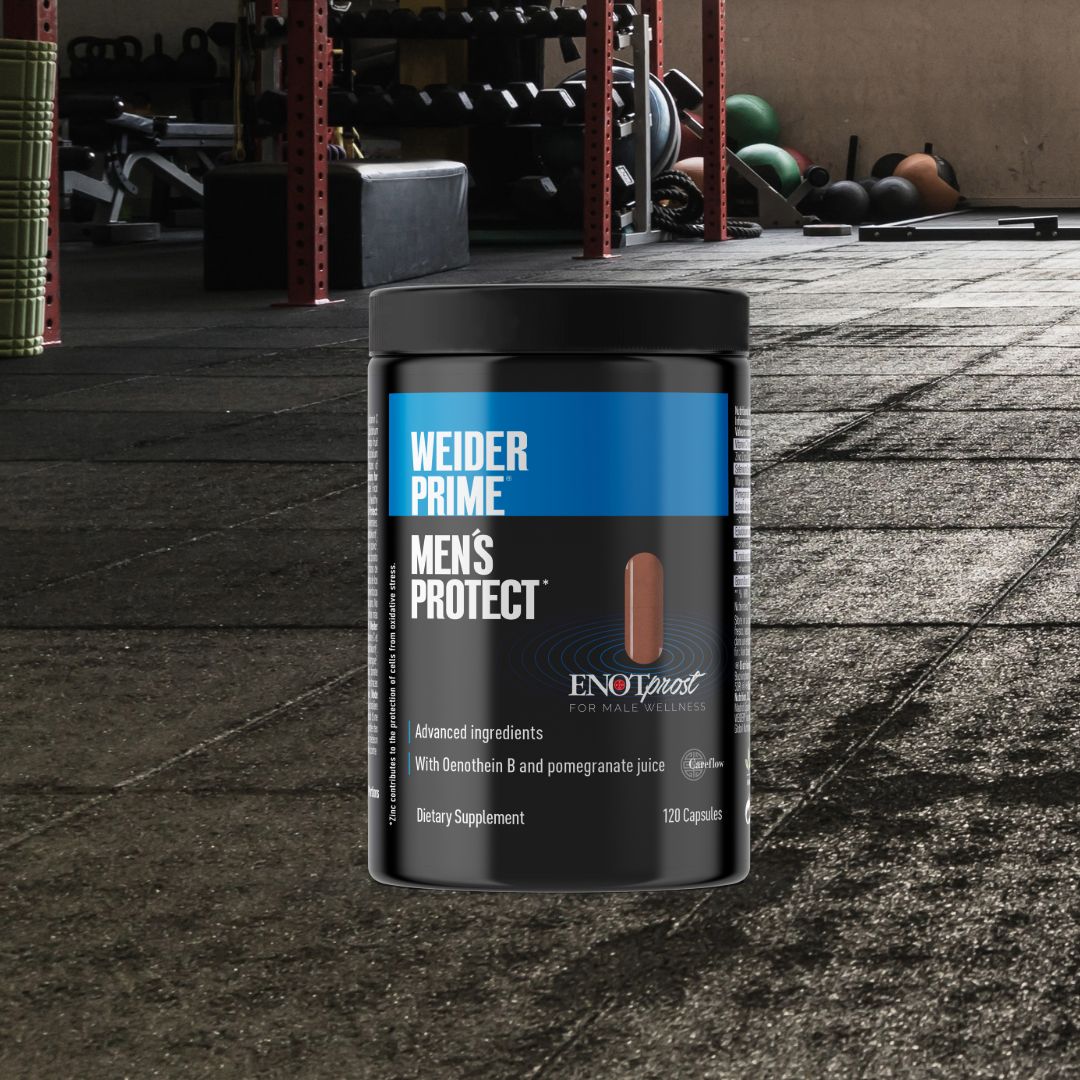
Prostate health depends on many factors, but regular exercise, adequate rest, and a healthy diet can prevent prostate problems. However, in addition, and considering that we do not always correctly fulfill the three previous premises (exercise, rest, and diet), and on the other hand, toxins such as tobacco, alcohol, etc., are not always avoided, supplementation may be necessary as a preventive measure, such as the use of products focused on prostate health like Weider Prime Men's Protect (Epilobium angustifolium, pomegranate extract, Zinc, Lycopene, Selenium, and Boron). In addition, we could add Omega-3. Even as prostate problems usually occur in men over 50, the combined use with Weider Prime Men's Protect
Written by: Alberto Sancristan
Compartir:
Creatine: The ultimate body-mind supplement
Types of Creatine and Which One to Choose in 2025