

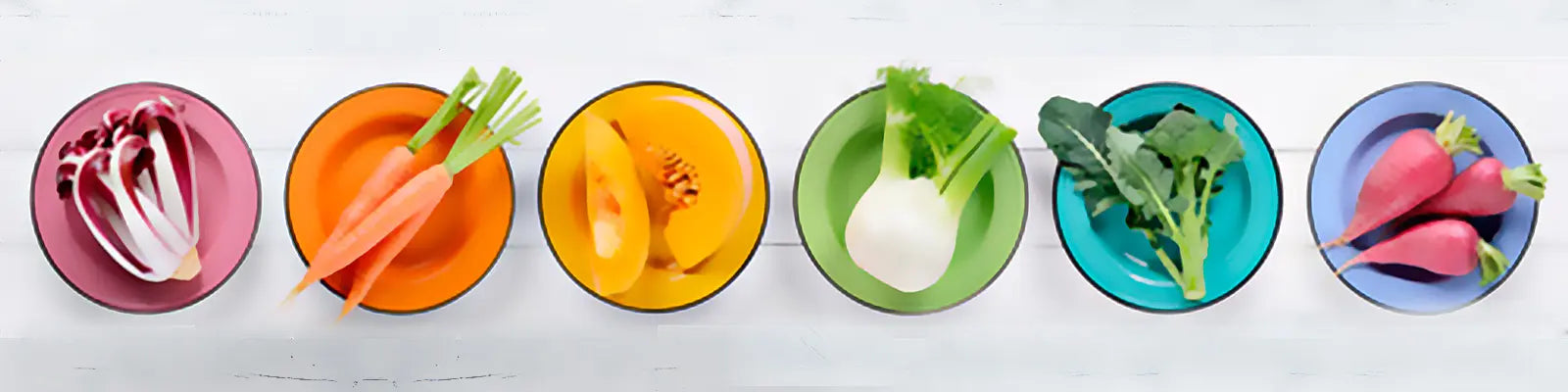
4 Simple Ways to Increase Your Vegetable Intake
Fortunately, it's no longer necessary to repeat that eating vegetables is good for your health. We've all heard the nutritional spiel about their micronutrient density, high fiber content, and low energy content. But for many, eating vegetables feels like an unpleasant chore. Fortunately, there are many ways to prepare, cook, and eat vegetables, and I'm going to give you some tips to easily incorporate them into your daily routine. Today we'll show you how to increase your vegetable intake in simple ways.
1. Use different cooking methods (not always the same ones)
Adding vegetables to your diet could be as simple as changing how you cook them! Sometimes, a vegetable you don't like boiled tastes much better roasted, grilled, steamed, or sautéed. Roasting a vegetable is an excellent method because the roasting process caramelizes the sugars in the vegetables, enhancing their flavor and making them sweeter. Practically all vegetables, from broccoli, carrots, and Brussels sprouts, can be roasted.
Try cutting a variety of colorful vegetables (e.g., eggplant, bell pepper, zucchini, red onion, and broccoli), add extra virgin olive oil, and season them with a little salt and pepper. Bake on an aluminum-lined tray at 180-200°C for 30-45 minutes and voilà! Crispy, sweet, and delicious vegetables.
2. Add herbs and spices
Using herbs and spices to season vegetables is a great way to enhance their flavors. Here are 10 quick herb/spice and vegetable pairings to try:
- Asparagus with dill, nutmeg, or rosemary
- Broccoli with oregano, thyme, rosemary, garlic, or nutmeg
- Carrots with parsley, basil, curry, chives, or thyme
- Zucchini with garlic, basil, parsley, or oregano
- Eggplant with garlic, parsley, mint, sage, curry, basil, rosemary, or oregano
- Leeks with mustard, parsley, dill, bay leaves, thyme, paprika
- Mushrooms with ginger, pepper, cumin, parsley, or thyme
- Tomatoes (yes, it's actually a fruit) with basil, tarragon, garlic, chives, dill, mint, oregano, paprika, fennel, parsley, or thyme
3. Vegetables with healthy sauce
Eating vegetables as a snack in the office, school, or university is an easy way to get more servings per day. Options like carrots, cucumber, and celery with hummus are quite tasty and nutritious. You can even consume vegetables with hummus, meaning blending or pureeing bell pepper with hummus, or guacamole with carrots.
4. Vegetable creams (soups)
An easy way to get extra vegetables into your day! All you have to do is boil or slow cook the vegetables you want with a little water or broth, then blend with a mixer or eat as is. Pumpkin cream is always a favorite, with pumpkin, potatoes, onion, leek, and garlic.
In addition to this, it would be ideal to add seasonal vegetables to your daily diet, which have certain benefits for our body, such as:
- It's more economical; both seasonal fruits and vegetables are cheaper because the cost of cultivation, harvesting, and transportation is much lower.
- It's tastier; generally, non-seasonal products must be harvested before they are ripe, cooled to stop their ripening, stored, and transported over considerable distances. The ripening process is controlled in warm, humid rooms to cause uniform ripening. This means that naturally ripening vegetables are harvested at their peak, and that's why their flavor is better.
- More nutritious; out-of-season vegetables can be affected in nutrient density, especially antioxidants. For example, leafy green vegetables like spinach are rich in folic acid which breaks down over time, and the vitamin C content of spinach can decrease significantly.

Compartir:
Sets and repetitions in cutting or bulking phases
Are Pre-Workout Supplements Necessary?