

Before answering the question, there are certain points we need to be clear about when it comes to gaining muscle mass, whether you are an omnivore, vegetarian, or vegan.
The 4 factors that determine muscle gain
TO GAIN MUSCLE MASS, WE MUST PAY ATTENTION TO FOUR FACTORS, EACH ONE AS IMPORTANT AS THE NEXT:
Strength training + hypertrophy
YOUR MUSCLES MUST HAVE A REASON TO GROW. To do this, you must progressively increase the weight loads, and as a result, your strength will increase, and your muscles will respond to the stimulus by becoming larger and stronger.
Consistency
It's not enough to make an effort for just one day. The final result will be seen from the sum of daily effort over a prolonged period. This isn't about days, weeks, or months... in most cases, it takes years. What I always advise is to ENJOY THE PROCESS, AND DON'T GET DISCOURAGED IF IT'S NOT AS FAST AS YOU EXPECTED. I always tell my students: "this is a marathon, not a sprint."
Nutrition
You must pay close attention to what you eat; food is your material for building your body. To help you understand, you can't build a wall without cement and bricks, right? Well, something similar happens with muscle; if you don't provide it with material (food), HOW ARE YOU GOING TO BUILD MUSCLE MASS? Not from nothing, of course, no matter how much you train, how consistent you are, or how well you rest. And yes, this applies equally regardless of your eating style. PROTEINS, CARBOHYDRATES, AND FATS SHOULD BE PRESENT IN THE RIGHT AMOUNTS.
Rest
This is fundamental for muscle mass regeneration and growth. Your sleep should be restorative and of good quality, as should taking active breaks when necessary. And this point is perhaps the most overlooked, but it is very important to understand that muscles do not grow when you exercise; MUSCLE ACTUALLY GROWS WHEN YOU REST. Many people get obsessed and make the mistake of training every day or 6 days. I advise resting between 2 and 3 days (preferably 3). Train four days a week and rest for 3.
Yes, you can gain muscle mass with vegan protein
Now, with these four points clear, THE ANSWER IS YES: YOU CAN GAIN MUSCLE MASS WITH VEGAN PROTEIN.
We know that protein intake should be increased when in the muscle-gaining phase, and we won't deny that it's easier with an omnivorous diet because we have a larger quantity of animal-based protein foods.
If we are vegetarian, we have the option of dairy products and eggs, which will make it much easier to meet daily requirements.
And if we are vegan or follow a vegan diet, yes, it is more limited IN TERMS OF VARIETY, BUT NOT IN TERMS OF QUALITY. It is more than proven that plant-based proteins are of extraordinary quality and effectiveness, it's just that in some cases, you need to know how to combine foods well to provide ALL THE ESSENTIAL AMINO ACIDS we need.
If you include these protein sources in your diet and adhere to the four factors I mentioned at the beginning, you will have no problem gaining muscle.
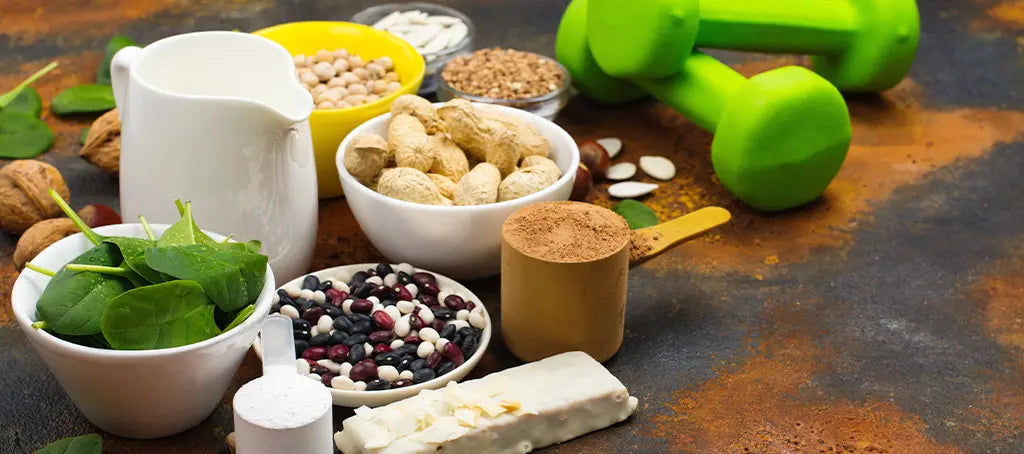
LEGUMES
They are the basic plant protein source in the plant kingdom. Among them, we highlight black beans, with a protein content of 25%.
Also peas, a very versatile legume, which today can also be found in textured form for preparing a multitude of recipes or in our Vegan Protein, Vegan Protein which contains Pisane C9, undoubtedly the most complete plant protein supplement on the market.
The queen of legumes in the vegan world: soy, ideal for its high protein content, low carbohydrates, and the great variety of forms in which it is currently consumed: textured soy, tofu, tempeh, yogurt, plant-based drink, and it is even sold as “vegetable meat” very similar in texture to chicken meat.
They are "superfoods" in reality, as they provide proteins, slow-digesting carbohydrates, low in sugars, high in fiber, rich in vitamins and minerals... in the previous article, What's special about peanut powder and how is it used?, I comment exactly the same, LEGUMES NOT ONLY PROVIDE QUALITY PROTEINS BUT A PERFECT COMBINATION OF OTHER NUTRIENTS. And by the way, peanut powder becomes another of the best protein sources from legumes, ideal for adding to numerous dishes to make them high in protein.
NUTS
Such as almonds, pistachios, or cashews, which provide no less than 17g of protein per 100g.
DRIED ALGAE
Perhaps a less commonly used and known product, but with great nutritional power. Spirulina algae, for example, contains 58g of protein per 100g. It can be included in the diet by adding it to smoothies, soups or purees, bread making... Another superfood that we should consider when adding protein to our diet.
VEGETABLES AND FRUITS
Yes, yes, in fruits and vegetables we find quality proteins, only in smaller quantities. But all proteins add up, and for example, Brussels sprouts have almost 5 grams of protein per 100g... a 200 or 300 gram serving would already be 10 or 15g of protein that you would be adding to your meal. The same happens with artichokes, kale, guava, or avocado.

Products for muscle gain in vegan diets
Products for gaining muscle mass with vegan protein or plant-based amino acids.


Compartir:
Concentrated Protein vs. Isolated Protein. What's behind your shake?
Urinary tract infection in women, prevention and treatment