

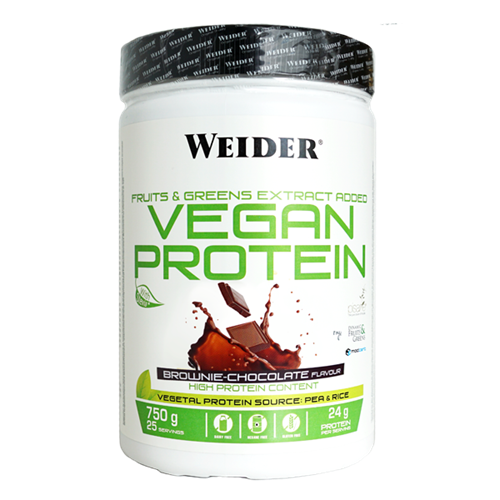
Do you know the difference between a whey protein supplement and a vegan protein?
Protein supplements can help athletes meet their energy requirements and improve their athletic performance (ergogenic effect).
Amino acids are the units that make up proteins. There are 20 amino acids, among which we find 9 essential amino acids (histidine, isoleucine, leucine, lysine, methionine, phenylalanine, threonine, tryptophan, and valine). Essential amino acids are those that cannot be synthesized by the body and must be obtained through diet.
During protein synthesis, all necessary amino acids must be present in the body. Therefore, if the diet/supplement does not provide an adequate and complete amount of essential amino acids, muscle synthesis and repair can fail. It is important that protein supplements for athletes contain each and every one of the essential amino acids in the necessary proportions and thus have a high biological value. Biological value refers to the proportion of essential amino acids in foods and their ease of assimilation by our body).
Whey Protein
In general, proteins from animal products have a higher biological value than those from plant sources. This is because their amino acid composition is more similar to body proteins. Foods considered to have the highest protein quality are eggs, followed by cow's milk, fish, and meat.
Numerous scientific data indicate that whey protein is an effective aid, as it can improve athletic performance.
Among the whey proteins, we find Isolate Whey 100 CFM, which is a protein with a high biological value and an adequate amount and proportion of branched-chain amino acids. In addition, among the essential amino acids, BCAAs are attributed the greatest ergogenic benefits.

Plant-Based Proteins
Plant-based proteins are of lower quality and lower biological value as they have some essential amino acids present in smaller quantities. Cereal proteins like wheat or rice are limiting in lysine, while legume proteins like peas, chickpeas, etc., are limiting in methionine. When consumed in the same meal (for example, lentils with rice), the amino acid from one protein complements the other, resulting in a high biological value protein. This combination is widely used and recommended in diets for vegetarians.

This concept of complementation/supplementation between different proteins can also be used in the case of protein supplements. A plant-based protein containing only pea protein extract or some cereal like rice or oats would be incomplete for an athlete. However, a supplement that combines both types of protein would be an optimal supplement with high biological value. Vegan Protein, made with pea isolate and rice protein, achieves an amino acid profile comparable to whey protein.
After reviewing the aminogram of Isolate Whey 100 versus Vegan Protein, we observe that both contain an adequate amount of each of the essential amino acids, but whey isolate contains around 23% branched-chain amino acids, while Vegan Protein contains 13%.
Conclusion
In conclusion and in my personal opinion, for an athlete who needs to supplement their diet, the choice would be a whey-based protein.
Vegan Protein is a high-quality protein with a high biological value and is a good protein supplement for vegetarian athletes. But it's also for all those who, due to an allergy or intolerance, cannot consume whey protein.
Compartir:
The Weider Principles
Oatmeal raisin cookies