

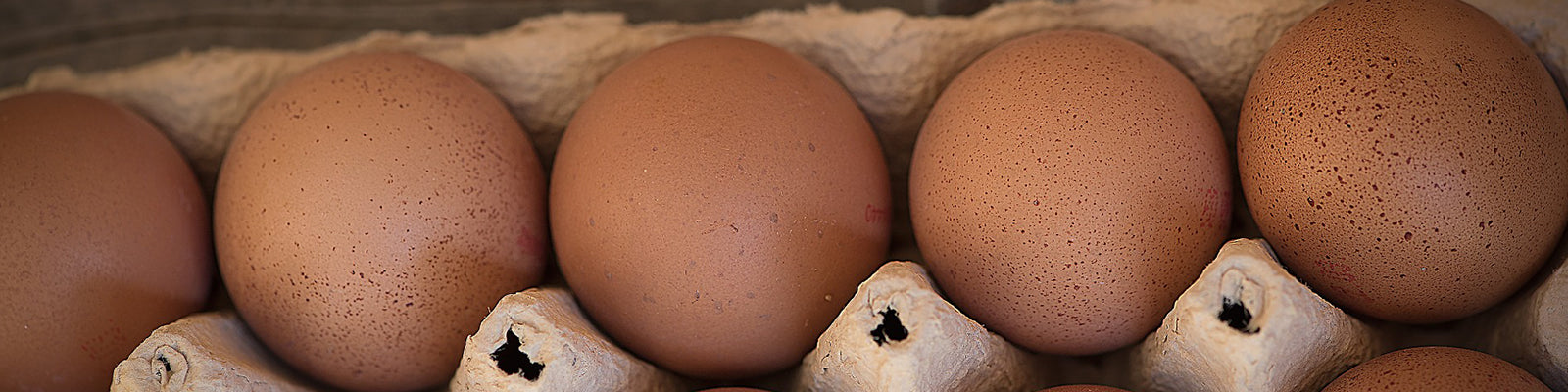

Discover the benefits this superfood can bring you
| The egg's image has probably undergone the greatest transformation over the years. Initially, it was considered a staple food due to its high nutritional value (1950s), and later in the 1970s-80s, its consumption was thought to need reduction due to a possible detrimental effect on health. Currently, since 2000, the egg is considered a fundamental food, presenting beneficial health effects. |
1. EGG COMPOSITION AND NUTRITIONAL VALUE
The egg is a very heterogeneous food that can be divided into three phases: shell, yolk, and white. Table
-1 shows the nutritional value of the egg.
Egg yolk: 47% water, 16% protein, 34% fat, 0.6% carbohydrates
Egg white: 88% water, 10% protein, 0.03% fat, 0.8% carbohydrates.
a. Proteins
The percentage protein content in eggs (12%) is slightly lower than in other protein-rich foods such as meat (20%) and fish (18%). This protein is unevenly distributed between the white and the yolk, with the white being eminently protein-rich, while the yolk contains, in addition to proteins, all the lipid fraction of the egg. Table-2 describes the amino acid content of the egg (mg/egg). The contribution of methionine+cysteine, lysine, and phenylalanine+tyrosine is notable.
b. Lipids
The fatty acid composition is favorable, as there is a perfect balance between saturated and unsaturated fats with an AGI/AGS ratio of 1.77. This ratio is more favorable than most meats (0.88 for lamb, 1.12 for beef, 1.36 for pork).
On the other hand, the egg has a high cholesterol content (400mg/100g).
Finally, it is particularly noteworthy that the fatty acid fraction can be modified through diet. In recent years, eggs enriched with long-chain n-3 polyunsaturated fatty acids (omega-3), such as EPA and DHA, have appeared. This has been achieved with feed enriched with these same fatty acids.
c. Minerals
To consider the nutritional value of the egg with respect to minerals, we will use the coverage of recommended daily intake (RDI) amounts. This coverage, relative to the intake of 2 large eggs (120g), is 8% for iron and zinc, 16% for phosphorus, 11% for calcium, 4% for magnesium, and 34% for selenium.
d. Vitamins
The egg is one of the foods that contains the most notable concentrations of both water-soluble and fat-soluble vitamins. All fat-soluble vitamins show high values, especially K (62% of the RDI), and also have a high accumulation capacity, depending on the feed. In smaller proportions, it contains vitamin B2 (30%) and vitamins A, D, B12, and folic acid, which vary between 12% and 16%.
e. Variability of egg composition
Various factors can induce changes in egg quality, which also affect chemical composition and nutritional value. The elements that can be modified through hen feeding include some minerals (iodine, fluorine, manganese), some vitamins (A, E, K, B1, B2, B12, biotin, pantothenate, folate), and some fatty acids, especially unsaturated ones (oleic, linoleic, and linolenic, etc.).
On the other hand, Table-3 shows the differences between different types and the most frequent forms of egg preparation.
2. EGG CONSUMPTION AND BLOOD CHOLESTEROL
Given the recommendations to restrict egg intake in the 1970s and 1980s, many studies were dedicated to establishing the specific relationship between modifications in egg intake and their impact on plasma cholesterol levels.
The conclusions on the effects of egg consumption indicate that, despite providing a high amount of cholesterol, it does not cause a substantial increase in plasma cholesterol and its influence on the LDL (bad) cholesterol/HDL (good) cholesterol ratio is negligible.
3. HYGIENIC-SANITARY CONSIDERATIONS
The egg, due to its structure, is one of the safest foods. From the outside to the inside, there are a series of barriers that protect it from external contamination. Therefore, it is difficult for the egg to become contaminated during the production stage on the farm. Risk factors are those that alter the structure of the shell and the outer cuticle. For this reason, washing to remove dirt is not authorized, as it would remove the layer that covers the pores of the shell from the entry of microorganisms.
It is known that food poisoning, whether by salmonella or another microorganism, is due to incorrect handling of fresh eggs and those that have not undergone thermal modification. Germs are never found inside the egg.
Basic recommendations for egg handling and storage:
a. Buy eggs with an intact shell and no apparent dirt.
b. Respect consumption dates and always store in the refrigerator.
c. Always consume after preparation or cooking, or store in the refrigerator for a short time.
d. Mayonnaise and other similar sauces should be prepared with extreme hygiene and always by adding lemon or vinegar.
e. Handle eggs away from the containers, pans, etc., where they will be beaten, cooked, or served, to avoid contact with the shell.
THE EGG AS A FUNCTIONAL FOOD
We could highlight some components of the egg with positive health properties. This fact could confer upon the egg the possibility of being a functional egg (Hasler-2000).
a. Carotenes: neutralize free radicals, thus preventing cell damage. Their content and properties vary depending on the carotene.
b. Lutein and Zeaxanthin: promote the maintenance of visual functions.
c. Vitamin-E: neutralizes free radicals. Its content in the egg can be increased by adding a supplement to the feed.
d. ω-3 fatty acids (DHA/EPA): reduce the risk of cardiovascular disease. Improves visual and mental functions. Its concentration can be increased by modifying the feed.
e. Choline: promotes the maintenance and improves cognitive functions, especially memory.
Nutritional Tables
Table-2. Amino acid content of the egg, expressed as mg/50g egg
| Amino acid | Whole egg | White | Yolk |
| Glutamic acid | 850 | 520 | 330 |
| Cysteine | 150 | 100 | 50 |
| Phenylalanine | 350 | 230 | 120 |
| Glycine | 220 | 140 | 80 |
| Histidine | 160 | 90 | 70 |
| Isoleucine | 360 | 210 | 150 |
| Leucine | 570 | 330 | 240 |
| Lysine | 450 | 250 | 200 |
| Methionine | 210 | 150 | 60 |
| Proline | 260 | 150 | 110 |
| Serine | 500 | 270 | 230 |
| Tyrosine | 280 | 160 | 120 |
| Threonine | 320 | 180 | 140 |
| Tryptophan | 110 | 70 | 40 |
| Valine | 430 | 270 | 160 |
Table-3 Composition of egg and its cooking methods.
Fresh egg |
Boiled egg | Fried egg in oil | Omelette | |
| Water | 75.8 | 75.7 | 70.3 | 71.7 |
| Energy (Kcal) | 145 | 145 | 184 | 171 |
| Protein | 12.5 | 12.5 | 13.4 | 14.6 |
| Fat | 10.5 | 10.5 | 14.5 | 12.5 |
| SFA | 3.1 | 3.1 | 4.3 | 3.7 |
| MUFA | 4.2 | 4.2 | 5.8 | 5 |
| PUFA | 1.3 | 1.3 | 2 | 1.5 |
| Cholesterol | 380 | 380 | 400 | 350 |
| Retinol | 200 | 200 | 220 | 225 |
| Vit E (eq) | 1.2 | 1.2 | 1.2 | 1 |
| Vit-B1 | 0.08 | 0.08 | 0.07 | 0.06 |
| Vit-B2 | 0.46 | 0.35 | 0.41 | 0.35 |
| Vit-B6 | 0.12 | 0.12 | 0.14 | 0.1 |
| Vit-B12 | 1.6 | 1.2 | 1.2 | 1.3 |
| Folate | 60 | 60 | 42 | 30 |

Compartir:
7 Keys to Reducing Your Fat Levels
Muscle Protection, How can we protect our muscles?