

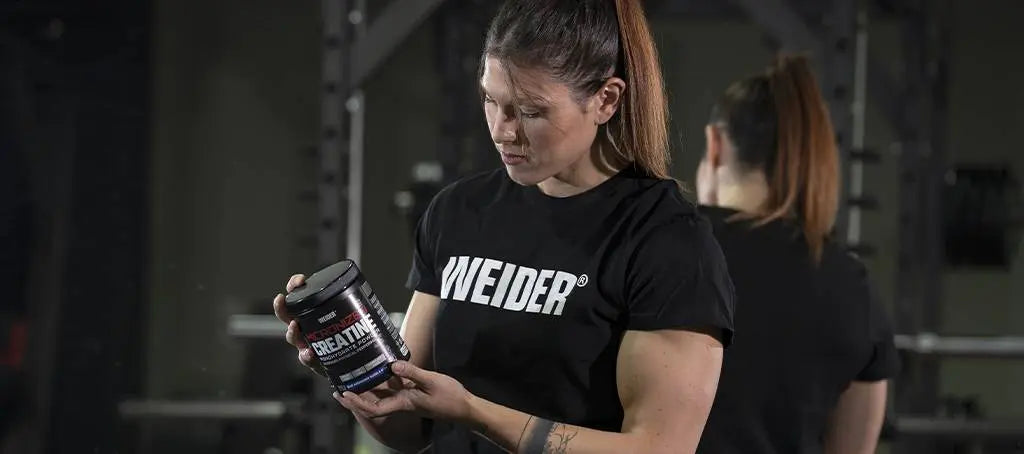
The most fashionable, most in-demand, and most viral supplement of the last two years, without a doubt: CREATINE MONOHYDRATE.
Perhaps there was a time when it was forgotten, relegated to the back of supplement store shelves (or so it seemed to me), but the truth is that creatine monohydrate is a supplement that is several decades old.
Let's travel back in time…
Creatine was discovered as a natural substance in the human body in the 1830s, and its effects on the human body were studied in the 1920s. However, its use as a sports supplement did not become popular until decades later.
Creatine monohydrate did not become a popular sports supplement until the 1990s. Although some bodybuilders and athletes may have used forms of creatine in the 60s, it wasn't until the 1990s that studies began to demonstrate the positive effects of creatine monohydrate on improving athletic performance. And here we are today, in another millennium, and this magnificent supplement continues to be one of the most effective, if not the most effective, for gaining strength and muscle mass.
And with that last sentence, I answer the question in the title of this article: ABSOLUTELY YES: among the many benefits of creatine, one of the clearest and most evident is INCREASED MUSCLE MASS
What is creatine and how does it work?
Creatine is a substance found naturally in our body and is produced by the liver, kidneys, and pancreas. We can also obtain it through some foods, such as meat and fish. Creatine is used to produce energy in our muscle cells, especially during high-intensity, short-duration physical activities, such as weightlifting or sprints.
When we consume creatine as a supplement, it accumulates in our muscles and helps improve their ability to produce energy. This translates into an increase in strength and muscle power, which in turn leads to an increase in muscle mass.
What is creatine used for?
Do you want to know all the benefits of consuming creatine monohydrate? It's completely logical and normal that it's so in demand! Keep reading…
- Increased strength and muscle power: helps improve the muscles' ability to produce energy, and, consequently, an increase in strength and muscle power.
- Increased muscle mass: Creatine contributes to an increase in muscle mass, especially when combined with strength training.
- Improved athletic performance: A more than evident benefit of creatine is that it helps improve performance in high-intensity, short-duration activities, such as weightlifting, sprints, and jumps.
- Accelerated muscle recovery: Creatine undoubtedly accelerates muscle recovery after exercise, and this will help us maintain the same level of demand in subsequent workouts.
- Reduced muscle fatigue: A prominent benefit of creatine is that it reduces muscle fatigue during exercise, allowing us to train longer and/or with greater intensity.
- Protection against age-related muscle deterioration: New studies suggest that creatine has a protective effect against age-related muscle deterioration.
- Cognitive benefits: Recent research has found that creatine monohydrate helps improve cognitive function and brain performance, especially in certain groups of people, such as vegetarians and vegans.
How to take creatine?
You will be recommended several ways, AND ALL OF THEM ARE CORRECT. Before training, after training, before and after… My general way of recommending it is 5 grams daily, regardless of the training time.
Creatine monohydrate acts cumulatively, not immediately, so the most practical thing is to take it always at the same time, every 24 hours, and from Monday to Sunday, regardless of whether you train or not.
Note, this is a recommendation, then each case would have to be individualized, and according to the sport or physical demands of each person.
IMPORTANT: hydrate. For creatine monohydrate to be perfectly assimilated and to get the most out of it, drink a minimum of 2.5 L of water per day.
What are you waiting for to take creatine monohydrate?
Well, yes, YOU HAVE TO WAIT, I'll explain. If you want to get the most out of creatine monohydrate in sports, it is better to "prepare the body" so to speak. If you sign up for the gym for the first time today and haven't exercised before, wait, condition your muscles first FOR AT LEAST 3 MONTHS, so that when you decide to use creatine, it performs at its best.
Studies say it is safe to take it always without a break, what do you think?
I think that, even so, being completely safe to take it always, it is better to take a break of 15 or 30 days every 3 months using creatine monohydrate. Precisely so as not to accustom the body, and so that we always have that feeling of loading. While we rest for a few days, the creatine stores are emptied, we train for a few days without it, and when we resume creatine intake, we get that initial feeling again, so we can improve our marks from the first time.
Why do we use Creatine Monohydrate at Weider?
There are several types of creatine, not just monohydrate, I list them for you:
- Creatine monohydrate
- Creatine hydrochloride
- Creatine gluconate
- Creatine phosphate or phosphocreatine
- Kre-Alkalyn creatine
- Creatine malate
- Creatine ethyl ester
- Creatine citrate
These are the most common, but there are more, such as creatine nitrate, decanate, or AKG.
At Weider, we use creatine monohydrate in our products because it is considered the most effective and safest form of creatine. Here's why:
- Scientific evidence: it has been the subject of numerous scientific studies that support its efficacy and safety. It has consistently been shown to improve athletic performance, increase strength and muscle mass, and improve recovery after exercise. Other types of creatine do not have the same amount of scientific evidence to support their benefits.
- Absorption and bioavailability: it has excellent absorption and bioavailability in the human body. It is easily absorbed into the bloodstream and efficiently used by the muscles.
- Safety: Creatine monohydrate has been extensively studied in terms of safety and no serious side effects have been reported when taken within the recommended doses.
At Weider, we have the best creatine monohydrates on the market. It is very important to always ensure the QUALITY and GUARANTEE that such a demanded supplement offers us.
Creatines available at Weider
On the one hand, we have PREMIUM CREATINE and PURE CREATINE from the Victory line, two creatines with the distinguished CREAPURE quality seal, one of the most demanded by consumers today.
CELL MAX, one of my favorite and most recommended products, especially for the weight gain and muscle mass phase, for those people who particularly struggle to gain weight: CREATINE MONOHYDRATE + BCAAs + GLUTAMINE + A RAPIDLY ABSORBING CARBOHYDRATE MATRIX.
And finally, we have the innovative MICRONIZED CREATINE, simply PERFECT, and I'll tell you why:
- Maximum purity and quality Creatine Monohydrate
- Micronized, for faster absorption and to avoid possible stomach discomfort
- With an extra boost of maltodextrin (a very rapidly absorbing carbohydrate). Since the beginning of time, it has been known and proven that creatine monohydrate is better absorbed when taken with a fast-acting carbohydrate. This is because these carbohydrates increase insulin levels in the body, which in turn improves muscle absorption.
- A unique patented component, Astragin, has been added:
- Astragin is an ingredient composed of a blend of astragalus root extract and panax notoginseng extract. This combination improves nutrient absorption and increases their bioavailability. In this case, added to our MICRONIZED CREATINE, it will maximize its absorption when taken.
- As an additional note, it's worth highlighting that Astragin can also help improve intestinal health and reduce inflammation.
And I could keep writing much more about this fascinating and effective supplement, now it's your turn to choose the creatine monohydrate that best suits your needs. Combined with a healthy diet and consistent training, success is guaranteed. GO FOR IT!

Other related articles:
- What supplements to take for muscle mass gain?
- All about Creatine
- Let's talk about creatine in training: What benefits does it bring us?
- Creatine is not a steroid


Compartir:
Which protein bars are recommended?
Non-traumatic upper limb injuries in cycling