

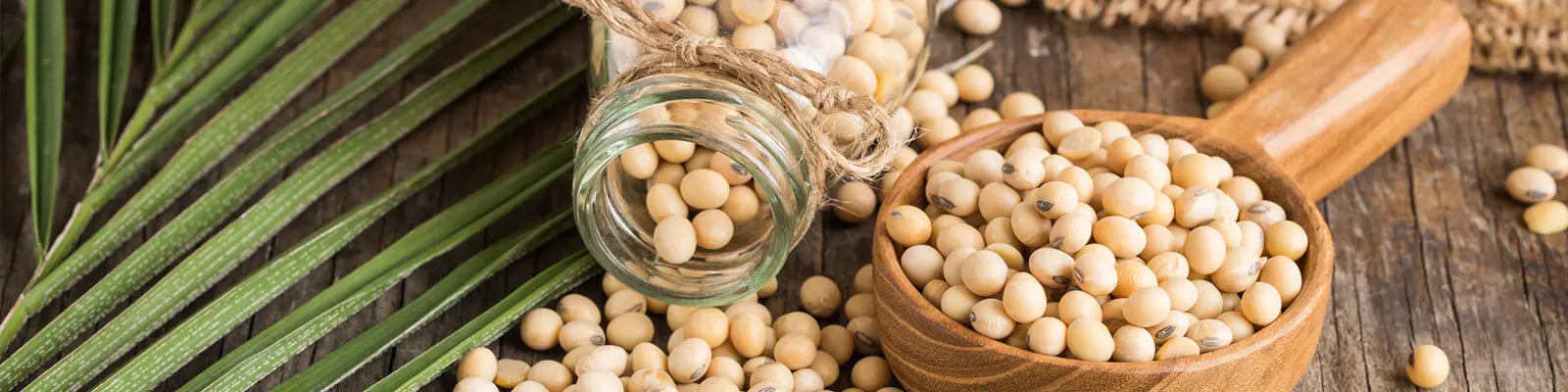
Today we are going to debunk all the myths and focus on the benefits of soy based on scientific evidence.
A common argument (in an era when everyone "knows" about nutrition) is to call some food "harmful" and label another a "superfood." That's what happens with soy. It seems it doesn't matter that certain populations have been eating it and benefiting from it for thousands of years. Nor does it matter that emerging studies show how little evidence there is to fear a nutrient-rich food like soy.
Arguments based on scientific evidence:
HORMONE PLANTS
Soy contains compounds called phytoestrogens, which are plant estrogens naturally found in plants. These are slightly different from the estrogen hormones that humans produce, but similar enough that they can have some biological effects.
However, there's no need to panic; this can actually turn out to be one of the benefits of soy. For example, menopausal women often experience hot flashes, and consuming soy products can help reduce these symptoms (see study).
HEART DISEASE
Soy products can help reduce the risk of heart disease, as they lower blood cholesterol levels (see study).
They reduce cholesterol production in the liver and, secondly, soy products like tofu are often consumed as a substitute for animal proteins, which are higher in saturated fats. By replacing meat with tofu, you can reduce the saturated fat content of the meal, which in turn reduces the risk of heart disease.CANCER
Another benefit of soy is that it has a protective effect (or at worst, neutral) on the risk of breast cancer. There's a misconception that women should avoid soy because it increases the risk of breast cancer. However, the latest available evidence suggests that, in most cases, consuming soy products can actually be protective against breast cancer.
- In this study (see study), they found that soy intake protected against breast cancer in Asian countries, but this effect was not found in Western countries.
- According to this one (see study), its consumption may be associated with a lower risk of breast cancer incidence and mortality. Therefore, soy does not have estrogenic effects in humans.
- And in this last one (see study), they found that soy intake may be associated with a small reduction in the risk of breast cancer.
In addition to the aforementioned research on breast cancer, other studies have observed the relationship between soy intake and other types of cancer in women. In fact, a review has shown that women who eat more soy tend to have a lower risk of ovarian and endometrial cancer. Additional evidence also suggests that women who consume more soy may be protected from both colorectal and gastrointestinal cancers. (see study1, study2)
The studies I have linked here are among the best available on the benefits of soy and human health. They are primarily based on aggregated data from numerous studies. While specific studies in particular contexts might occasionally portray soy as harmful, it's important to understand that critical health decisions are rarely made based on individual studies.
Conclusion
In summary, soy is safe for consumption. Fears about harmful effects stem from laboratory and rodent studies that use especially high levels of phytoestrogens. Rodents metabolize these compounds differently than humans. It's clear that soy is not the panacea of the 21st century, but placing it on the list of enemies for people's health is also untrue.
As with all foods, do not overindulge, but if you are a healthy person, you can enjoy 1-3 servings daily.
I hope you enjoyed it!
If you want to know more about plant proteins, click here.

Compartir:
Vegan Red Berry Ice Cream
Avocado ice cream