

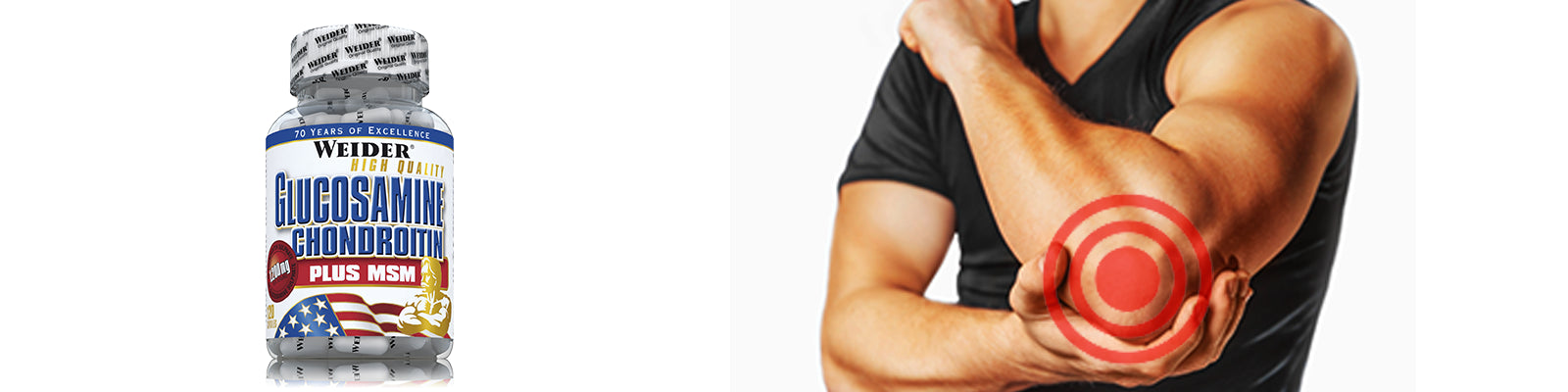
Do supplements help prevent joint pain?

Ingredients that work
If there's one thing we often forget, it's PREVENTION, and unfortunately, we only remember it when it's too late, when we're already in pain. PAIN is a symptom that something is wrong, a possible injury? In the case of joints, this symptom indicates that we are already too late and that from now on nothing will be the same again. This is the turning point that marks a sports career, because from now on we must be very careful with our joints and we may never be the same again. I know it's very difficult to spend money on something I apparently don't need, because if my joints don't hurt, why would I take a product for them? The idea of preventing when we have to buy proteins, creatine, glutamine, etc., is complicated, but it's true, we have to reserve a percentage of the budget to take something that "we won't notice", JOINT PROTECTORS.
The ingredients with proven effectiveness that we should use are:
CHONDROITIN SULFATE:

Chondroitin is the most abundant Glycosaminoglycan (GAG, Proteoglycan) of the extracellular matrix of articular cartilage. It contributes to its mechanical and elastic qualities, thanks to its water-retaining property, which maintains and controls the osmotic pressure of the cartilage. This preserves the hydration, flexibility, and elasticity properties of this tissue.
In degenerative joint diseases, the key phase of deterioration is the loss of these Proteoglycans from the cartilage.
The efficacy of Chondroitin sulfate in athletes is due to the following mechanisms of action:
Anti-inflammatory activity in the cellular components of inflammation.
- Stimulation of endogenous (self-produced) proteoglycan and hyaluronic acid synthesis.
- Reduction of the catabolic (destruction) activity of chondrocytes.
- Protective effect on the cellular components of cartilage.
It also reduces swelling and/or joint effusion. Since this natural ingredient is not a drug like Non-Steroidal Anti-Inflammatory Drugs (NSAIDs), its action is slower, taking between 2 and 3 weeks to take effect. Its efficacy is equal to that of NSAIDs (aspirin, ibuprofen, naproxen, etc.), but its action is also residual, maintaining the effect for up to 2-3 months after stopping the treatment. Hence, there are periods of intake and rest. Considering that the structure of chondroitin sulfate is identical to that of our own chondroitin sulfate (a natural substance in human connective tissue), oral administration of it has no toxicity.
Chondroitin sulfate has the advantage of being a much safer natural substance than classically used drugs, as it has no gastrointestinal, hepatic, renal, or cardiovascular adverse effects like most NSAIDs, so it can be administered chronically as these pathologies usually require, acting as a basic treatment.
- Recommended dose: usually between 600 and 1,200 mg per day. Divided into one or more doses and preferably after meals. For at least 3 months.
- Warnings: Chondroitin has anticoagulant activity, its use could prolong clotting time or enhance the action of anticoagulant drugs.
GLUCOSAMINE SULFATE:
Glucosamine sulfate is an active ingredient of biological origin present in the human body. This amino sugar is essential for the normal growth and repair of joint cartilage. It is an essential substrate for the biosynthesis of Proteoglycans and Glycosaminoglycans (GAGs) found in cartilage. We could say that it is the raw material our body uses to produce a wide variety of other substances involved in the formation of tendons, ligaments, cartilage, and the synovial fluid that surrounds the joints. As a food supplement, it is a natural ingredient because it is synthesized from the chitin of the shells and/or carapaces of crustaceans and mollusks. Its therapeutic action is due to its promotion of proteoglycan synthesis in articular cartilage, in addition to possessing an anti-inflammatory activity independent of cyclooxygenase (the anti-inflammatory activity of NSAIDs), hence its good tolerance and gastrointestinal safety. The safety characteristics, onset of action, level of effectiveness, and duration are similar to those mentioned for Chondroitin sulfate.
- Recommended dose: usually between 1,200 and 1,500 mg per day. Divided into one or more doses and preferably after meals. For at least 3 months.
- Warnings: Glucosamine, being an amino-sugar, can slightly increase blood glucose levels, so diabetic people should take this into account.
Combined intake of Glucosamine and Chondroitin
The main chondropathies and osteoarthritis are caused by the wear and/or dehydration of the cartilage and joint fluid, causing the hard parts of the joint (bones) to rub together and produce discomfort, stiffness, and pain.
There is sufficient evidence of increased efficacy with the therapeutic combination of these two substances. Research shows that taking supplements combining Glucosamine and Chondroitin sulfates increases the amount of cartilage and fluid surrounding the joint and prevents their deterioration. Other research shows how these substances can prevent the rapid progression of these joint pathologies.
Conclusion
We can say that these ingredients, when taken long-term and once the injury has occurred, in addition to relieving pain, can also slow down joint wear in people with osteoarthritis. In addition to being effective in the symptomatic treatment of these pathologies, they are highly safe. This last point is key in the chronic treatment of chondral pathology, as it reduces adverse effects and possible interactions with other drugs.
As always at Weider, and based on the latest research, we are at the forefront of product formulation. In this case, we offer you one of the best and most complete supplements for the prevention and care of your joints: GLUCOSAMINE CHONDROITIN PLUS MSM.

If you haven't tried it yet, don't wait to get injured; set aside a small percentage of your budget and make sure your joints are also nourished.
And remember, achieving your goals or not only depends on you. The secret is EDS: Exercise, Diet, and Supplementation.

Compartir:
Milk: Essential in your diet
7 Keys to Reducing Your Fat Levels