

When we look for how to know if protein is of quality, we must look at several aspects. Protein quality is related to the number of essential amino acids (AA) in a protein molecule, that is, those essential amino acids that we must ingest through food because we cannot synthesize them.
In addition, for an athlete, the amount of BCAAs the protein contains will be important for optimal muscle regeneration after exercise, as these go directly to the muscle. BCAAs are essential branched-chain amino acids, specifically 3: valine, leucine, and isoleucine.
We can say that a higher quality protein will be one that contains the most essential amino acids and also BCAAs if we are looking for optimal recovery for the athlete.
The content of vitamins is also important, as it provides benefits and more quality to the protein.
The biological value of proteins
A widely used index to measure protein quality is the biological value (BV), which is the measure of the absorption and synthesis in the body of protein from food intake. Protein foods with high biological value would be whey, milk, eggs, meats, egg whites, casein, whey protein, etc.
Proteins of animal origin have a higher biological value than proteins of vegetable origin. This is because those of animal origin are complete proteins, meaning they contain all essential amino acids in sufficient quantity. In contrast, proteins of vegetable origin are incomplete and do not contain all essential amino acids. However, when we combine two complementary vegetable proteins (i.e., that are deficient in different amino acids), these are equivalent to a complete protein.
What about protein supplements? What should we look for?
According to this, the highest quality protein would be one with all essential amino acids and that most closely resembles the composition of proteins with the highest biological value (egg or milk). If we look at the supplementation market, one of the most commonly used proteins is whey protein from milk serum, due to its high quality. Although there are also proteins from eggs, meat, and vegetable proteins.
Vegetable proteins
In the case of vegetable proteins, we must ensure that they combine two complementary protein sources (legumes, seeds, or cereals).

For example, pea protein or rice protein alone are incomplete. Peas are limiting in methionine, and rice is limiting in lysine, but if we combine both, they complement each other. This is the case with Weider's Vegan Protein, which by mixing both sources makes the protein complete. It also has an added bonus of plant extracts and organic cereals that complement the nutritional profile of this protein.
Whey Proteins
These are proteins based on whey isolate, with a more complete amino acid composition, characterized by their rapid absorption. You can find proteins that are 100% whey isolate or that mix isolate with whey protein concentrate.

Among the isolated proteins, we highlight Isolate Whey 100 CFM, made using a cold mechanical extraction process that better maintains the natural properties of the product. It is enriched with digestive enzymes and the milk used comes from grass-fed cows. These additions increase the quality of the product.

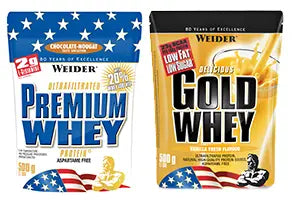
For high-quality concentrated proteins, we can recommend Premium Whey, with 66% whey concentrate and 20% isolate, it contains 2 grams of L-Glutamine peptides per serving that facilitate recovery and muscle development.
And if you prefer a pure concentrate, you can choose Gold Whey, with easy absorption and digestion.
But do we know if our supplement brand offers us a quality product? Now we are ready to know how to choose our quality protein, and therefore our supplement. In conclusion, we will have to read labels and check what type of protein we have in front of us and its composition (BCAAs).
Iratxe Echalecu and Belén Rodríguez
Sports Dietitian Nutritionists at Tu Gestor de Salud
Compartir:
Benefits of Peanuts
Tips to prevent muscle soreness and injuries