

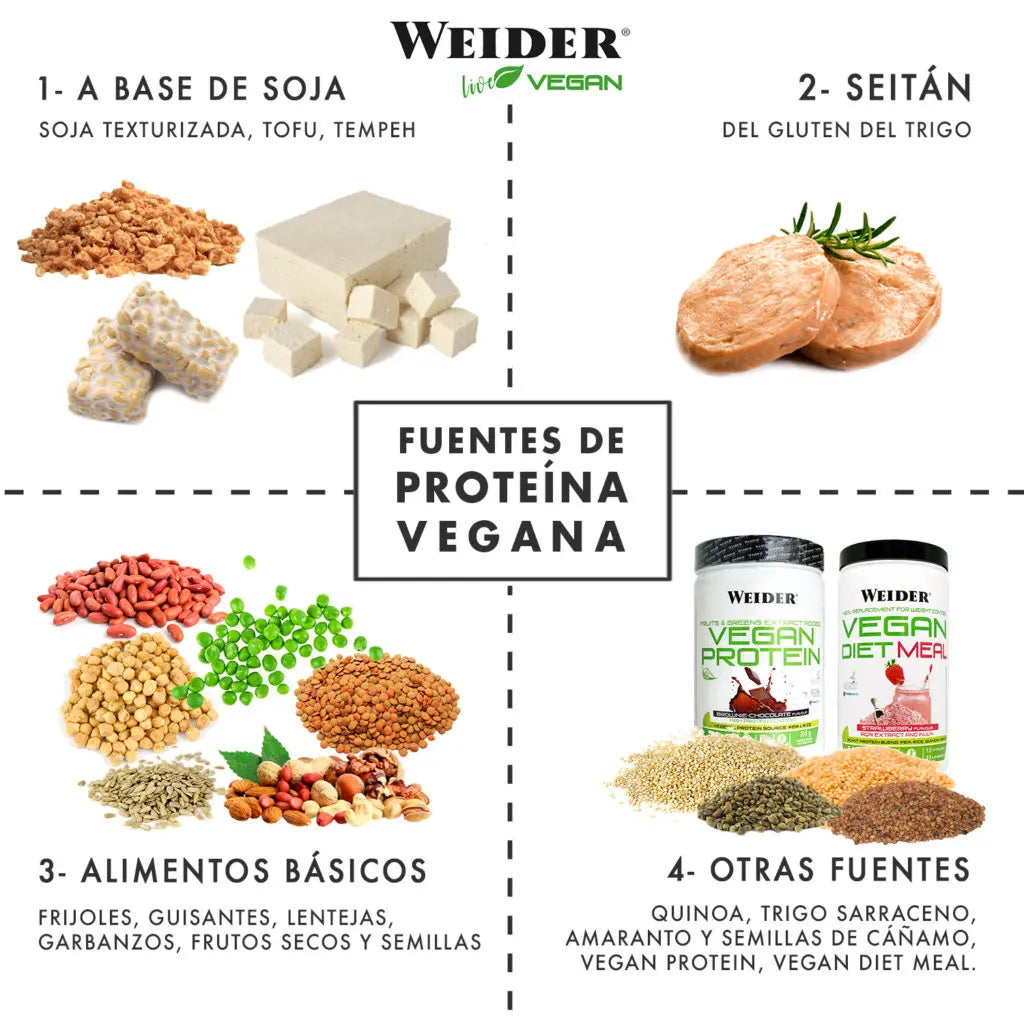
Vegan proteins
Fruit and vegetable-based diets, such as the vegan and vegetarian diets, are becoming increasingly popular, and it's a healthy option as long as you know how to do it right. It's true that it can be very confusing, as there are many alternatives to meat in the vegetarian diet, but not all of them are the best. That's why I'm going to guide you a bit on the ones available in our market:
1. Soy-based
Compared to meat and chicken, vegetarian and vegan alternatives made from soy protein tend to be much lower in fat, contain a similar amount of protein (15 – 20 g of protein per 100 g), and contain fiber.
- Texturized soy, tofu, tempeh are made from soy. They tend to be one of the best options as they have no more than 2 ingredients and are good sources of protein and calcium. You even have one that tastes very good, which is Heüra.
Soy is also one of the only plant-based protein sources that contains all nine essential amino acids in good quantities, which is an excellent advantage and a great alternative to meat!
If you're still wondering if soy is bad, you can read this article where I explain that there is no scientific evidence to show that it is harmful or can cause a detrimental effect on our hormonal health.
2. Seitan
It comes from wheat gluten, a protein that is not considered high quality. While it can be an alternative to add more flavor and variety to your diet, I don't consider it a daily alternative.
In addition to not having a high biological value protein contribution, like soy for example, it has less calcium and is less nutritionally dense.
3. Beans, peas, lentils, chickpeas, nuts, and seeds
These foods are the really important ones and those that should be essential for anyone who eliminates meat. They are good sources of protein and minerals such as iron, calcium, zinc, magnesium, copper, phosphorus, and B vitamins. These foods are also low in fat and high in fiber, making them good alternatives to meat.
It's true that due to their high fiber content, they may have lower bioavailability because they are harder to digest; however, this can be increased by soaking and cooking them.
Legumes like beans, soy, lentils, and peanuts (including peanut butter) are also an important source of the amino acid lysine, which we should include in our diet to stay healthy.
4. Other protein sources
Whole grains such as brown rice, rice, whole wheat bread, oats, and millet also provide protein; but these are not really very high in it. However, among these, you can find complete proteins in quinoa, buckwheat, amaranth, and hemp seeds.
On the other hand, and very helpful especially for athletes, is protein powder, which can be pea protein-based and can achieve an amino acid profile almost equal to whey protein (see comparison). This is the case with Weider's Vegan Protein, the most complete plant-based protein on the market. You also have equally healthy and vegan meal replacement options such as Vegan Diet Meal.

Remember that to learn more about plant-based eating, I have other articles that can help you:
- Deficiencies in the vegan diet
- Everything you need to know if you want to be vegetarian
- Vitamin B12 deficiency in vegetarians and vegans
- Vegan diet

Compartir:
What is collagen and what is it for?
Everything you always wanted to know about fasted training